Why a fire job brings this up
Asbestos was used in many building products into the 1980s, including some textured ceiling finishes, drywall joint compound, vinyl floor tiles and sheet flooring, and duct wrap. Lead was common in residential paint before 1978. Undisturbed, these materials mostly stay put. Demolition, sanding and scraping release them as dust.
Fire adds a complication. Heat can make some materials brittle, and firefighting water can soften others. Debris may already be broken up on the floor. That makes testing more important, not less, before anyone shovels debris into a dumpster or sands a wall.
In Colorado, asbestos inspection and abatement for regulated work generally must be done by state-certified professionals, and the Colorado Department of Public Health and Environment (CDPHE) publishes the rules for homes and other buildings. Check CDPHE's current guidance or ask your building department what applies to your project.
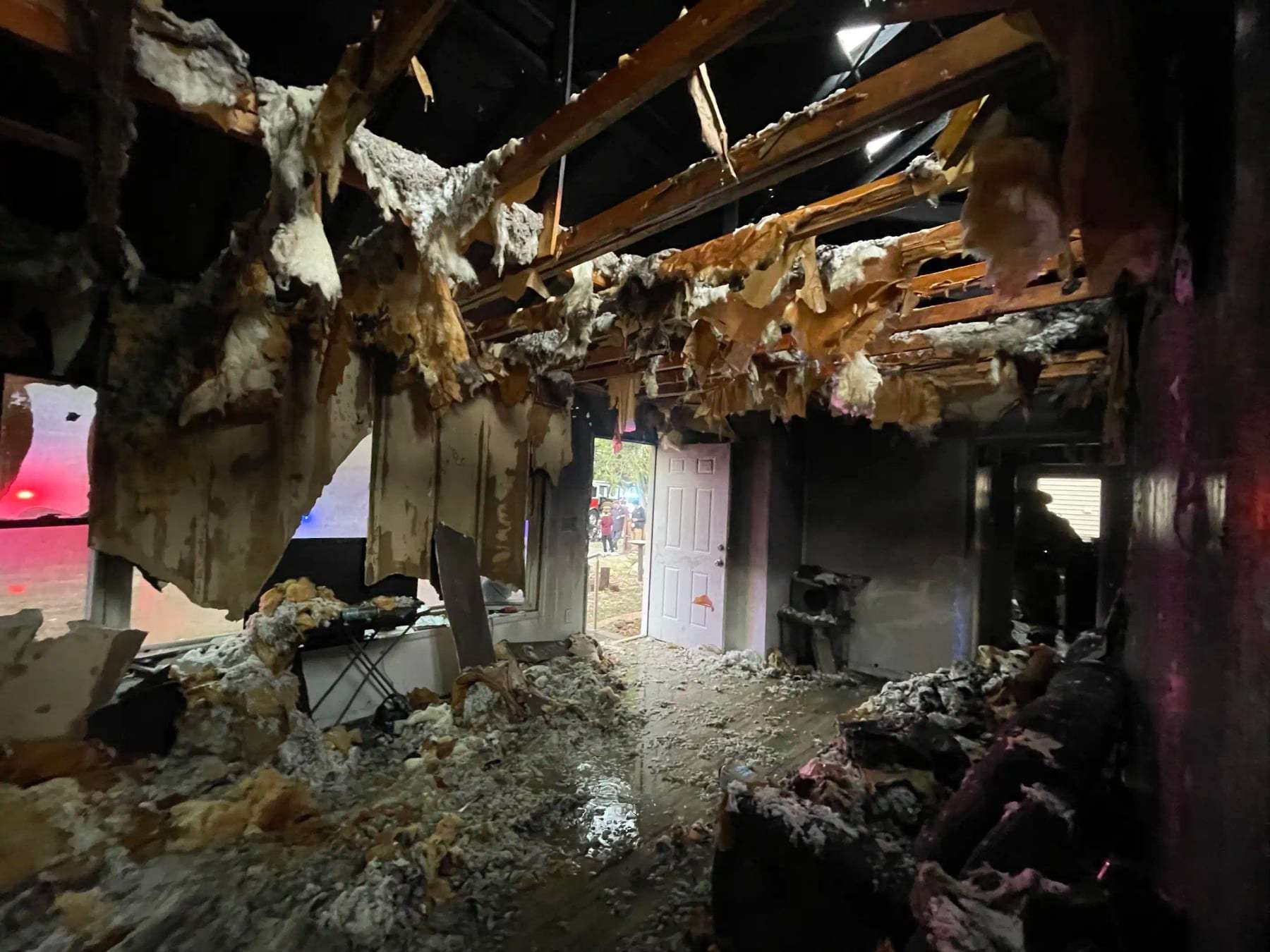
Interior gutted by fire with collapsed ceiling insulation hanging down. Example of the work involved; the photo does not show a specific property or a job for this site.
Materials to ask about, by house age
| Material | Possible concern | Most relevant in |
|---|---|---|
| Textured popcorn ceilings | Asbestos in some older formulations | Houses and remodels before the 1980s |
| Drywall joint compound and wall texture | Asbestos in some older products | Pre-1980s construction |
| Vinyl floor tiles, sheet flooring and mastic | Asbestos in some older products | Kitchens, baths and basements of older homes |
| Painted trim, doors and walls | Lead in paint layers | Homes built before 1978 |
| Duct wrap and furnace insulation | Asbestos in some older systems | Original basement furnace areas |
How testing fits into the fire cleanup
Stabilize first
Emergency board-up, tarping and water extraction can usually go ahead, without demolition of suspect materials.
Sample
A certified inspector takes small samples of materials that will be disturbed and sends them to a lab.
Plan around results
If results are negative, demolition proceeds. If positive, abatement by a qualified contractor comes before general demolition.
Clear and rebuild
After abatement, clearance steps confirm the area is ready, and the rest of the cleanup and reconstruction continues.
Common questions
Does my insurance pay for asbestos testing?
Many policies treat testing needed to repair covered damage as part of the claim, but practices vary. Ask your adjuster before testing starts and get the answer in writing.
Can I just leave the popcorn ceiling and paint over the soot?
Textured ceilings absorb smoke and are hard to clean. Encapsulating may be an option in some rooms, but discuss it with your restorer and an inspector before deciding.
How long does testing add?
Often a few days to a couple of weeks depending on lab turnaround and whether abatement is needed. Ask for an estimate at the start so the rest of the schedule can be planned.
General information for Centennial, not a quote or professional advice. In an emergency, call 911.