Why a smoldering pot causes so much trouble
When meat, beans or other high-protein food burns slowly, it releases an aerosol of fats and proteins that settles on every cool surface. The film is often pale yellow or invisible at first. You notice it as a tacky feel on cabinet doors, a varnish-like sheen on painted walls and an odor that people describe as rancid or like burned hair.
Because the smoke rises and spreads before it settles, residue usually reaches the upstairs hallway and bedrooms in a two-story house, and the living room in an open-plan ranch. In houses where the kitchen opens to a family room with a vaulted ceiling, the highest surfaces often hold the most.
Protein film is mostly a cleaning and odor problem, not a structural one. That is good news for the budget, but it means the work has to be thorough. Missing the tops of cabinets, the inside of the range hood or the light fixtures is the usual reason the smell returns.
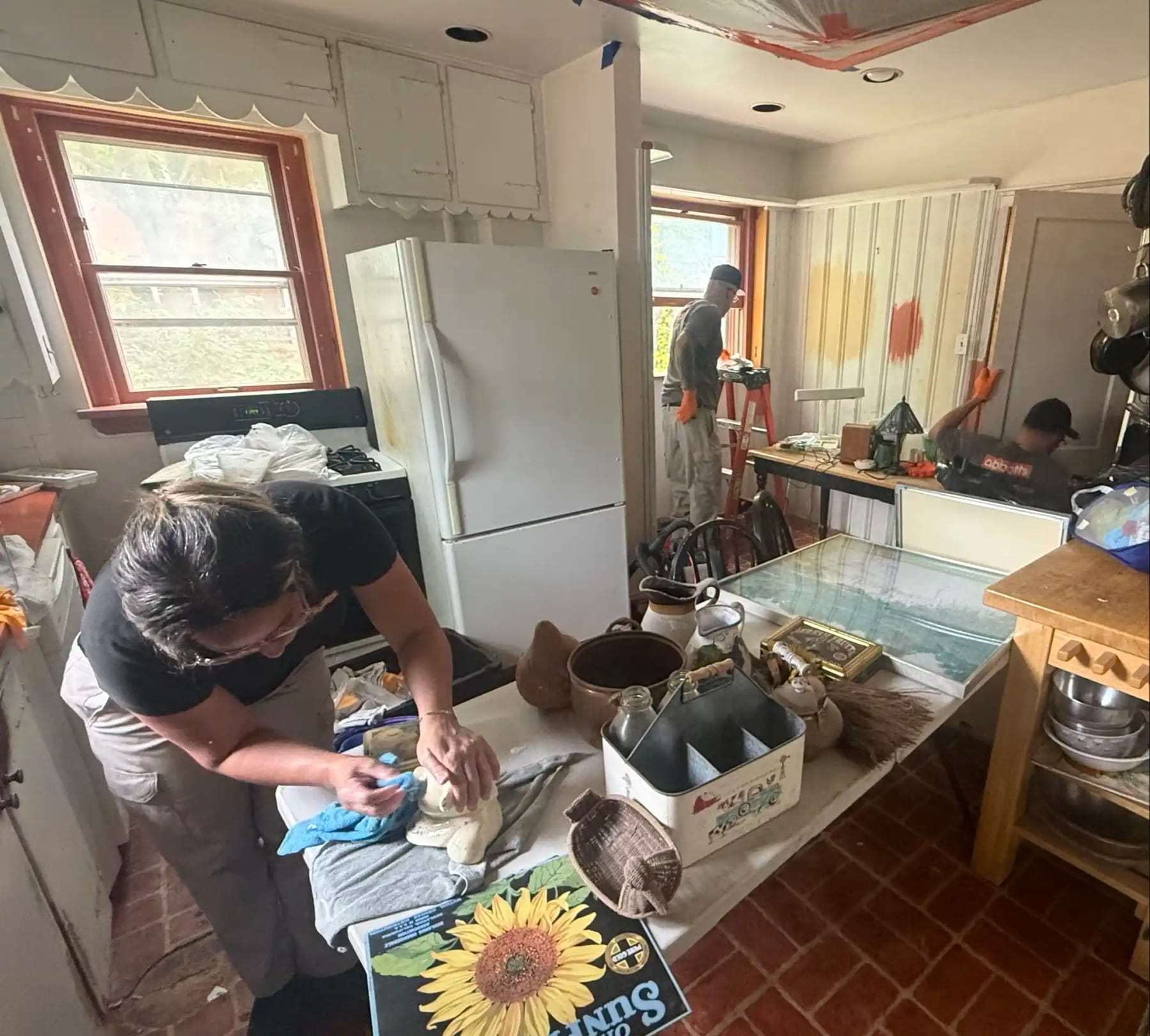
Technician packing kitchen contents into boxes beside a refrigerator. Included to show the kind of work involved, not a property or job connected to this site.
Places protein residue collects
- Tops of upper cabinets and the gap between cabinets and the ceiling
- Inside cabinets whose doors were slightly open, and on stored dishes
- The range hood, its filters and the duct behind it, or the over-the-range microwave vent
- Ceiling fan blades, light globes and recessed light trims
- Window blinds, curtains and the upper edges of door and window casings
- Refrigerator door gaskets and the coils behind the kick plate
- Return air grilles and the furnace filter
How a protein residue cleanup is usually sequenced
Ventilate and remove food
Discard open food and anything stored uncovered near the stove. Ventilate without running the furnace blower.
Degrease from the top down
Ceilings and upper cabinets first, using cleaners designed for protein and grease residue, with frequent changes of cleaning cloths.
Empty and clean cabinet interiors
Dishes and cookware are washed separately; shelves and the backs of cabinet boxes are cleaned before contents return.
Clean the hood and its duct
Filters can be soaked or replaced. The duct run to the exterior often needs cleaning or replacement too.
Treat remaining odor and evaluate paint
If walls still smell after cleaning, an odor-sealing primer and repaint may be needed.
Common questions
Why does the kitchen still smell after I wiped everything?
Residue on high surfaces, inside the hood duct and in the return air side of the furnace usually keeps the odor going. Household cleaners also tend to smear protein film rather than lift it.
Are dishes safe to keep?
Glass, ceramic and metal dishes can usually be washed and reused. Discard plastic food containers and anything porous that touched the residue.
General information for Centennial, not a quote or professional advice. In an emergency, call 911.